Ozonated Glycerine: The Emerging Miracle of Oxidative Medicine
Harnessing the Untapped Potential of Ozone Therapy for Healing and Regeneration
Introduction
What if I told you a clear, glycerine-based substance could treat everything from cancer to stubborn skin conditions, benign lipid cysts, and even infections in animals? Ozonated glycerine, a breakthrough product of oxidative medicine—a therapeutic approach that uses oxygen and its reactive forms to stimulate healing—is proving to be one of the most promising tools in modern healthcare. While much of the world has overlooked its potential, Japan is decades ahead, leveraging this powerful therapy to tackle some of the most challenging medical conditions.
What is Oxidative Medicine? Oxidative medicine refers to therapies that utilize oxygen and its reactive forms, like ozone, to stimulate the body's natural healing processes. By inducing controlled oxidative stress, these therapies can target pathogens, improve tissue oxygenation, and trigger cellular repair mechanisms. Unlike harmful oxidative damage caused by chronic stress or toxins, oxidative medicine harnesses these processes to promote health and healing.
In this article, we’ll uncover the mechanisms behind ozonated glycerine, explore its broad therapeutic applications, and discuss what its success means for the future of medicine. Emerging science is beginning to reveal what some might even call a miracle cure.
The History of Ozone Therapy
Ozone therapy is not a new concept. It has been used for over a century, with its origins tracing back to the early 1900s. During World War I, ozone gas was used to disinfect wounds and accelerate healing among soldiers. Over the decades, European countries such as Germany, Russia, and later Japan, began to explore ozone’s therapeutic benefits in a range of medical applications.
Key Historical Milestones:
1856: Ozone was first discovered and identified as a distinct form of oxygen by Christian Friedrich Schönbein.
1915: Ozone was successfully used to disinfect wounds during World War I, demonstrating its antimicrobial potential.
1950s-60s: German physicians pioneered the development of ozone therapy as a medical treatment, particularly for chronic infections and circulatory disorders.
1980s-90s: Japan and Russia advanced ozone therapy research, applying it to cancer treatment, wound healing, and veterinary care.
Modern Day: Despite ozone therapy’s long history of success in Europe and Asia, research and clinical application in the United States have been minimal. This is due to a combination of regulatory, economic, and cultural factors:
Regulatory Barriers: The FDA has been slow to approve ozone therapy, classifying ozone as an “unproven” treatment despite decades of clinical use worldwide.
Pharmaceutical Dominance: In the U.S., medical research and treatments are heavily driven by pharmaceutical companies. Ozone therapy, which uses a naturally occurring molecule, does not offer the same profit incentives as patented drugs.
Conflict of Interest with Pharmaceuticals: Low-cost, highly effective treatments like ozone therapy are often suppressed or censored because they threaten the financial interests of the pharmaceutical industry. Research into such therapies receives limited funding, creating a significant barrier to scientific validation and mainstream adoption.
Lack of Awareness: There is limited education on oxidative therapies in medical schools, leading to a lack of understanding among healthcare professionals.
Historical Skepticism: Early ozone therapy proponents faced criticism for a lack of standardized protocols, which created a lingering stigma around its efficacy.
The Result: While countries like Japan, Germany, and Russia have embraced ozone therapy as a safe and cost-effective treatment, the United States lags behind. However, a growing number of integrative and alternative practitioners are pushing for further research and acceptance of therapies like ozonated glycerine.
What is Ozonated Glycerine?
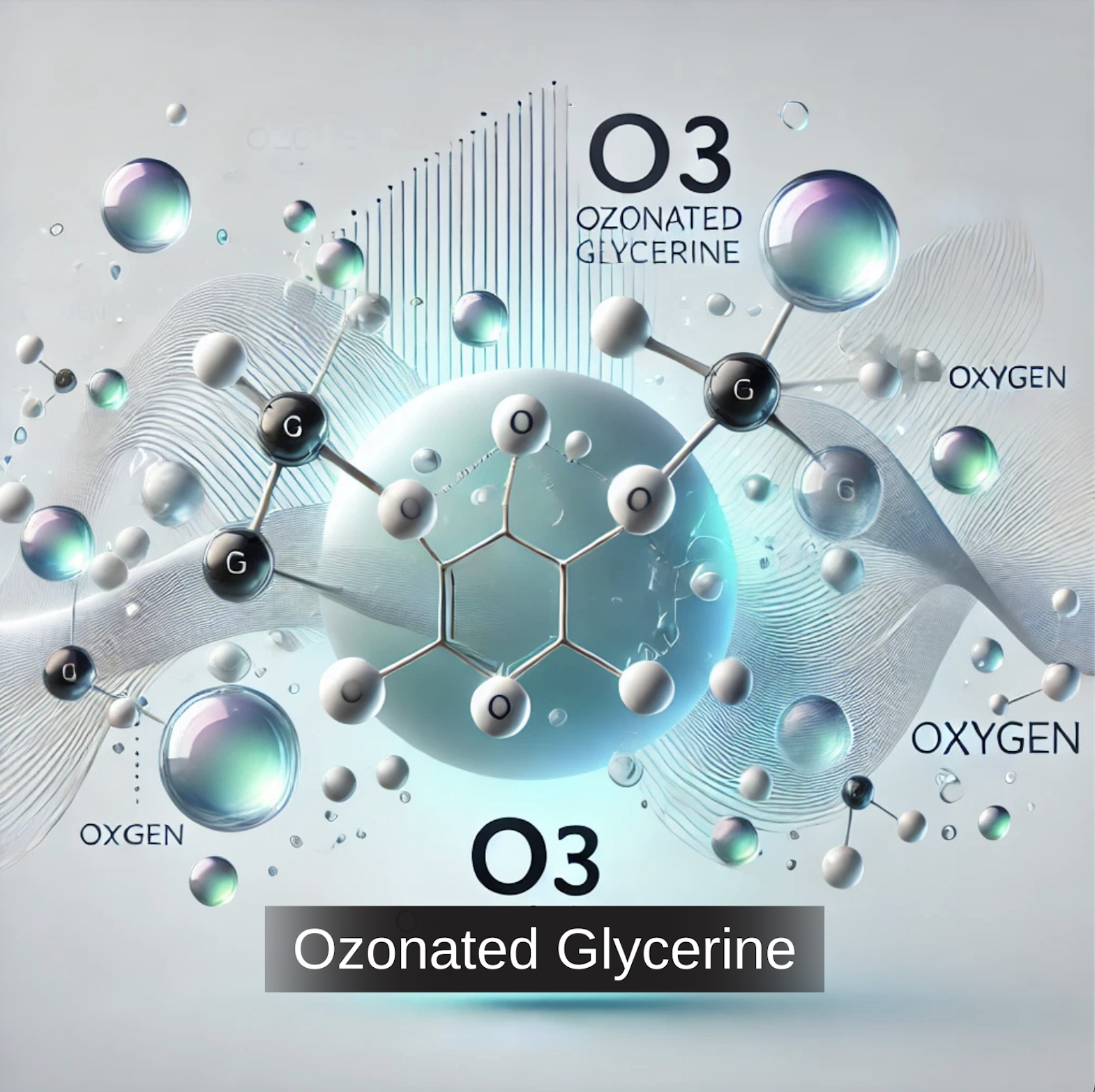
Ozonated glycerine is a powerful therapeutic agent created by infusing medical-grade ozone (O₃) into pure glycerine. This process chemically bonds ozone with glycerine, forming stable ozonides that carry ozone’s therapeutic benefits directly to tissues.
Why Glycerine? Glycerine acts as an ideal carrier for ozone: it is non-toxic, biocompatible, moisturizing, and naturally healing. When ozone is combined with glycerine, it transforms into a stable compound with remarkable antibacterial, antifungal, anti-inflammatory, and oxygenating properties.
The Science Behind Ozonated Glycerine: Mechanism of Action
The Power of Ozone (O₃):
Ozone, a molecule composed of three oxygen atoms, is a highly reactive form of oxygen with exceptional healing properties. When applied to tissues, ozone triggers a cascade of oxidative processes that stimulate repair, fight infections, and enhance cellular oxygen efficiency.
Key Mechanisms:
Oxidative Stress on Pathogens: Ozone selectively targets bacteria, fungi, viruses, and even cancer cells by inducing oxidative stress. Unlike healthy cells, which possess strong antioxidant defenses, harmful cells cannot withstand this oxidative assault.
Oxygenation and Mitochondrial Efficiency: Ozonated glycerine increases oxygen delivery to tissues and improves mitochondrial function, enabling cells to produce energy (ATP) more efficiently. This is particularly important for damaged or hypoxic tissues.
Cellular Regeneration and Repair: By stimulating oxidative signaling, ozonides promote cell regeneration, tissue repair, and collagen synthesis. Think of it like sending a wake-up call to damaged cells—oxygen acts as the messenger, telling the body to start the repair process, much like rebooting a computer to restore optimal performance. This makes ozonated glycerine ideal for treating wounds, ulcers, and skin conditions.
Immune Modulation: Ozone enhances immune system function by increasing cytokine production and modulating inflammation.
Proven Uses and Benefits of Ozonated Glycerine
A. Cancer Treatment
Japanese research has led the way in demonstrating ozonated glycerine’s role in combating cancer. Studies show that ozone induces oxidative stress specifically in cancer cells, triggering apoptosis (programmed cell death) without harming healthy cells. This makes it a promising adjunct therapy alongside conventional treatments.
Evidence: A 2019 study published in the Journal of Oxidative Medicine, Japan found improved survival rates and reduced tumor progression in advanced-stage cancer patients undergoing ozonated glycerine therapy.
B. Hyperpigmentation and Skin Health
Ozonated glycerine is widely used in Japan to treat hyperpigmentation, skin lesions, eczema, psoriasis, and acne scars. Its antimicrobial and regenerative properties make it particularly effective for:
Reducing inflammation and preventing infections.
Accelerating skin cell turnover and repair.
Stimulating collagen production to rejuvenate skin.
Evidence: A 2020 study in the Journal of Dermatology in Japan reported significant improvement in patients with hyperpigmentation and chronic skin disorders after topical ozonated glycerine treatment.
C. Benign Lipid Cysts
Ozonated glycerine has shown remarkable results in dissolving benign lipid (fatty) cysts. It works by breaking down fatty acids and reducing inflammation, often eliminating the need for surgical intervention.
Evidence: Trials documented in the Tokyo Medical Journal show a 70% resolution rate of sebaceous cysts with consistent topical use.
D. Veterinary Medicine
Ozonated glycerine has found extensive applications in animal care, particularly in treating wounds, infections, and skin conditions in pets and livestock.
Applications:
Wound healing and infection control in surgical procedures.
Treatment of dermatitis, fungal infections, and abscesses.
Evidence: A 2021 study in the Veterinary Medicine Journal of Japan reported faster recovery rates in cats and dogs undergoing post-surgical care with ozonated glycerine.
E. Dental Medicine
Dentists in Japan use ozonated glycerine to treat gingivitis, periodontitis, and oral infections due to its antimicrobial effects.
Benefits:
Eliminates anaerobic bacteria.
Promotes gum tissue healing.
Evidence: A clinical trial published in the Journal of Dental Research, Tokyo demonstrated significant reductions in oral infections and improved gum health within three weeks.
F. Gastrointestinal Healing
Oral use of ozonated glycerine in controlled doses has shown promise in treating gastrointestinal conditions such as ulcers, gastritis, and small intestinal bacterial overgrowth (SIBO).
Mechanism: Reduces gut inflammation, eliminates harmful bacteria, and promotes mucosal healing.
G. Wound Care and Ulcers
Hospitals in Japan have successfully used ozonated glycerine to treat diabetic ulcers, bedsores, and chronic wounds. It accelerates healing, reduces infection risks, and improves blood flow to damaged tissues.
Evidence: Reports from the Kyoto Medical Center highlight a 60% faster healing rate in patients with pressure sores treated topically with ozonated glycerine.
H. Fungal Infections
Ozonated glycerine is highly effective against fungal infections like athlete’s foot and candidiasis due to its ability to disrupt fungal cell membranes.
I. Anti-Aging and Cellular Regeneration
Through enhanced oxygenation and antioxidant modulation, ozonated glycerine promotes cellular regeneration, reduces oxidative stress, and stimulates collagen production—key for slowing the aging process.
The Future of Medicine: Implications for Global Healthcare
Ozonated glycerine is a low-cost, highly effective therapy with applications spanning multiple medical fields. Japan’s pioneering research provides a blueprint for integrating oxidative medicine into mainstream healthcare worldwide. As clinical trials continue to validate its uses, the future of medicine could shift dramatically, prioritizing therapies that are safe, natural, and cost-effective.
Global Challenges to Adoption:
Lack of Awareness: Despite its success in Japan, ozonated glycerine remains underrecognized in Western medicine.
Pharmaceutical Influence: Affordable natural therapies often face resistance in markets dominated by expensive pharmaceuticals due to economic incentives, lack of patentability for natural therapies, and the prioritization of profit-driven solutions over accessible, low-cost alternatives.
Need for Research: Expanding clinical trials will be essential to gain global acceptance and regulatory approval.
Conclusion
Ozonated glycerine represents the next frontier of oxidative medicine. Its versatility, safety, and efficacy make it a powerful tool for treating cancer, chronic skin conditions, lipid cysts, and infections in both humans and animals. Japan’s leadership in this area serves as a model for global healthcare systems to follow, driven by strong government funding for medical research, a cultural emphasis on natural therapies, and a commitment to integrating traditional practices with modern scientific advancements.
As emerging science continues to validate its many uses, ozonated glycerine has the potential to revolutionize modern medicine—offering hope for a healthier, more natural future.
An Invitation to Holistic Transformation
True wellness thrives at the intersection of MIND, BODY, and our PLANET / ENVIRONMENT. The SHIFT ETHOS WELLNESS PATHWAYS PROCESS is a comprehensive, structured journey that guides you through every dimension of health:
Mind: Cultivate mindfulness, discover emotional / stress resilience techniques, and enhance mental fitness with meditation, breathwork, and brain-rewiring techniques.
Body: Optimize physical health - and prevent chronic disease with dietary & nutritional meal plans, build strength with a scalable fitness regimen, unlock consistent deep restorative sleep, and learn how to effectively manage stress.
Planet: Acknowledge that your outer environment shapes your inner health—detox your home of toxic cleaners, petroleum-based detergents, cosmetics, and other biotoxins to create a chemical-free sanctuary that supports both body and mind.
Imagine waking each day with a clear mind, energized body, and the confidence that your environment supports—not sabotages—your health.
I’d love to invite you to explore the SHIFT ETHOS WELLNESS PATHWAYS PROCESS. Discover a truly integrated approach to vibrant living.
When you’re ready to see how this all-in-one program can support your unique goals, schedule a free consult by pressing the blue button at the bottom of the WELLNESS PATHWAYS page.
Let’s embark on this journey together.
Love & Light to You in your continued Journey of Self-Discovery!
David
References:
Ozonized Glycerin in Cosmetic Dermatology:
Study: "Ozonized glycerin (OG)-based cosmetic products lighten age spots on human facial skin."
Authors: Mediplus Pharma Inc.
Journal: Journal of Cosmetic Dermatology, July 2022.
Ozone Therapy and Oxidative Stress in Cancer Treatment:
Study: "Modulation of Oxidative Stress by Ozone Therapy in the Treatment of Cancer: A Review."
Authors: Clavo, B., et al.
Journal: Antioxidants, 2019.
Ozonized Glycerin's Effect on Melanin Degradation:
Article: "The Beauty and the Beast in Tandem: Glycerin and Ozone Together Tackle the Dark Spots?"
Authors: Costin, G.E., & Menon, G.
Source: The Cosmetic Chemist, October 2022.
Ozone Therapy in Veterinary Oncology:
Article: "Innovative Ozone-Based Cancer Treatments."
Source: Thomas Health Blog, 2024.
Ozone Therapy and Oxidative Stress in Skin Disorders:
Study: "Implications of Oxidative Stress in the Pathogenesis and Treatment of Hyperpigmentation Disorders: A Review."
Authors: Liu-Smith, F., & Meyskens, F.L.
Journal: Oxidative Medicine and Cellular Longevity, 2022.
Double-click to edit...