Can We Outperform Nature? The Truth About Modern Farming and Its Impact on Your Health
Introduction
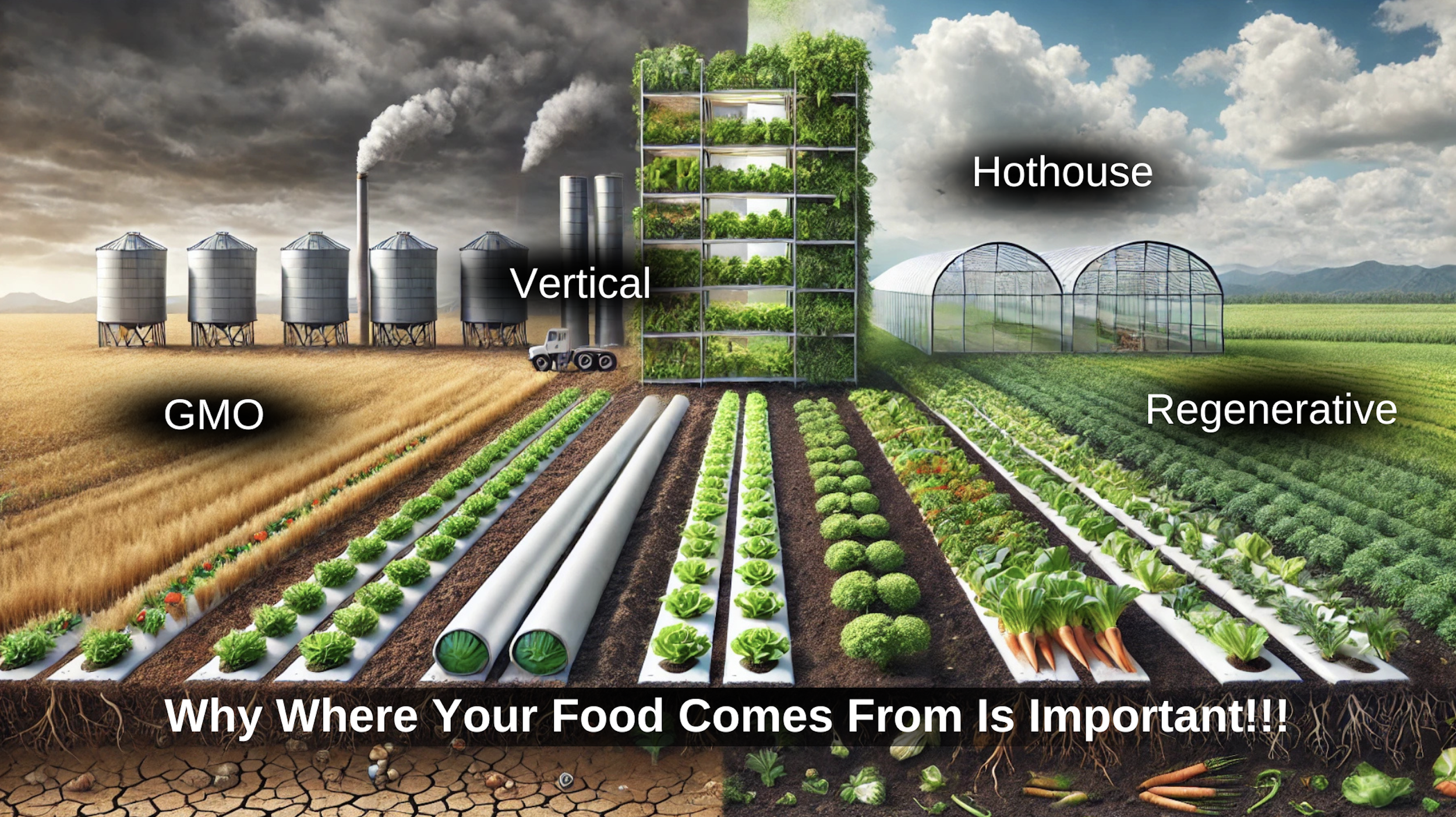
In humanity’s quest to produce more food faster, modern farming techniques like hothouse farming, vertical farms, and genetically modified crops have emerged as innovative solutions. Yet, when it comes to the nutrient content of the end product—and its impact on human health—these methods often fall short compared to nature’s original blueprint.
This article delves into the stark contrasts between modern farming practices and regenerative organic farming, revealing how each approach affects the nutrient density of our food and, ultimately, our well-being. Spoiler alert: Nature knows best.
Genetically Modified Crops and Petroleum-Based Farming
The Dirt Is Dead
Genetically modified (GM) crops are engineered to withstand pests and synthetic herbicides, enabling large-scale production. However, these crops are grown in dirt—not soil. Dirt lacks the life-giving ecosystem of fungi, bacteria, nematodes, and insects that make soil a dynamic, nutrient-rich environment. Without these microorganisms, critical processes like the Shikimate Pathway—a pathway essential for synthesizing aromatic amino acids in plants—are disrupted.
Instead of harnessing the natural nutrient cycle, GM farming relies on petroleum-based fertilizers to feed the plants. These fertilizers deliver basic nutrients like nitrogen, phosphorus, and potassium, but fail to provide the diverse micronutrients and organic matter that living soil offers. As a result, GM crops may look abundant, but they are nutritionally inferior.
Impact on Human Health
Food grown in dead dirt with synthetic fertilizers often contains lower levels of magnesium, zinc, and antioxidants—micronutrients vital for energy production, immunity, and cellular repair (Environmental Sciences Europe, 2016). But the impact doesn’t end with nutrient depletion. The reliance on chemical inputs like glyphosate, as well as insecticides, fungicides, and pesticides, introduces a range of health risks that ripple far beyond the soil.
Glyphosate’s Hidden Threats
Glyphosate, the active ingredient in many herbicides, is known to bind essential minerals in the soil, reducing their availability to plants. But it also disrupts human health in several alarming ways. Research has linked glyphosate to disturbances in the gut microbiome, a cornerstone of immunity and mental health. By selectively killing beneficial gut bacteria, glyphosate may contribute to conditions like leaky gut syndrome, inflammation, and even autoimmune diseases (International Journal of Molecular Sciences, 2020).
Moreover, glyphosate has been classified as a probable human carcinogen by the International Agency for Research on Cancer (IARC, 2015). Studies suggest potential links to non-Hodgkin lymphoma and disruptions in hormonal balance, raising serious concerns about its widespread use in food production.
The Cocktail of Chemicals in Conventional Farming
Insecticides, fungicides, and pesticides are routinely applied to protect crops from pests and diseases, but their residues often linger on the final product. These chemicals can accumulate in the human body over time, with research showing connections to:
Neurological Disorders: Chronic exposure to organophosphate pesticides has been linked to developmental delays, cognitive impairment, and Parkinson’s disease (Environmental Health Perspectives, 2018).
Hormonal Disruption: Many pesticides act as endocrine disruptors, interfering with the body’s hormonal signaling and potentially leading to fertility issues, metabolic disorders, and thyroid dysfunction (Endocrine Reviews, 2020).
Cancer Risk: Several fungicides and insecticides contain carcinogenic compounds, with long-term exposure increasing the likelihood of cancers such as leukemia and prostate cancer (National Cancer Institute, 2019).
Children and Vulnerable Populations at Greater Risk
Children, pregnant women, and individuals with pre-existing health conditions are particularly vulnerable to the effects of these agricultural chemicals. For example, prenatal exposure to certain pesticides has been associated with lower IQ scores, developmental delays, and higher risks of autism spectrum disorders (Environmental Research, 2017).
A Double Loss: Nutritional Deficiency and Toxic Load
When combined with the nutrient deficiencies inherent in crops grown in chemically treated dirt, the toxic load of these chemicals creates a double-edged sword for human health. On the one hand, we’re eating food with fewer protective nutrients like antioxidants and essential minerals. On the other, we’re ingesting residues that actively harm our bodies, leading to inflammation, oxidative stress, and chronic disease.
Hothouse and Vertical Farming: Controlled but Compromised
Controlled Environments, Missing Nutrients
Hothouse and vertical farms offer high-tech solutions to food production, utilizing hydroponics or aeroponics to grow crops in controlled environments without soil. While these methods excel in resource efficiency—saving water and reducing the need for pesticides—they bypass the natural soil ecosystem entirely.
Plants grown in these systems are fed synthetic nutrient solutions, but without the stressors found in natural environments, they produce fewer secondary metabolites like flavonoids and terpenoids. These compounds, crucial for human health, are natural plant responses to environmental challenges such as pests, UV light, and microbial interactions (Frontiers in Plant Science, 2020).
Impact on Human Health
While vertical farming can produce visually appealing crops, the lack of soil-derived micronutrients and phytochemicals means these foods cannot deliver the same health benefits as their soil-grown counterparts. Over time, a diet rich in these nutrient-limited foods contributes to dietary deficiencies, reducing the protective benefits of antioxidants and other essential compounds derived from organics - like vitamins, minerals, phytonutrients, and flavonoids.
Regenerative Organic Farming: Partnering With Nature
Soil as a Living Ecosystem
In regenerative organic farming, soil is alive—a thriving ecosystem teeming with fungi, bacteria, nematodes, and insects that work together to cycle nutrients and support plant health. Soil is the only substrate capable of providing a nutrient rich harvest. Practices like composting, cover cropping, and minimal tillage enhance this ecosystem, preserving the Shikimate Pathway and promoting the production of nutrient-dense crops.
By focusing on soil health, regenerative farmers ensure that plants are not only well-fed but also fortified with a full spectrum of micronutrients and antioxidants. Studies consistently show that crops from regenerative farms have significantly higher levels of vitamins, minerals, and phytonutrients compared to those grown with synthetic methods (Journal of Agricultural and Food Chemistry, 2019).
Impact on Human Health
Nutrient-dense food supports optimal health, reducing the risk of chronic diseases like heart disease, diabetes, and cancer. Organic produce grown in healthy soil also contains higher levels of compounds like polyphenols and carotenoids, which are linked to anti-inflammatory and anti-aging effects. Simply put, regenerative farming feeds both the body and the soil—a win for everyone.
Nature’s Blueprint: A Tough Act to Follow
The Limits of Technology
While modern farming methods strive for efficiency, they sacrifice nutrient density for convenience. Controlled environments and synthetic inputs can never replicate the complex interplay of life in healthy soil.
Nature’s system—rooted in biodiversity, symbiosis, and cycles of renewal—produces food that nourishes in ways even the best science has yet to match. Regenerative farming reminds us that true innovation lies not in reinventing the wheel, but in learning to work with nature rather than against it.
Choose Real Nutrition
As consumers, we have the power to shape the future of food. By supporting regenerative farmers and choosing organic, soil-grown produce, we not only nourish our bodies but also promote sustainable practices that protect our planet for generations to come.
Let’s return to nature’s wisdom, embracing farming practices that prioritize life—both in the soil and in ourselves. After all, the best recipe for health is one that starts with healthy soil.
An Invitation to Holistic Transformation
True wellness thrives at the intersection of MIND, BODY, and our PLANET / ENVIRONMENT. The SHIFT ETHOS WELLNESS PATHWAYS PROCESS is a comprehensive, structured journey that guides you through every dimension of health:
Mind: Cultivate mindfulness, discover emotional / stress resilience techniques, and enhance mental fitness with meditation, breathwork, and brain-rewiring techniques.
Body: Optimize physical health - and prevent chronic disease with dietary & nutritional meal plans, build strength with a scalable fitness regimen, unlock consistent deep restorative sleep, and learn how to effectively manage stress.
Planet: Acknowledge that your outer environment shapes your inner health—detox your home of toxic cleaners, petroleum-based detergents, cosmetics, and other biotoxins to create a chemical-free sanctuary that supports both body and mind.
Imagine waking each day with a clear mind, energized body, and the confidence that your environment supports—not sabotages—your health.
I’d love to invite you to explore the SHIFT ETHOS WELLNESS PATHWAYS PROCESS. Discover a truly integrated approach to vibrant living.
When you’re ready to see how this all-in-one program can support your unique goals, schedule a free consult by pressing the blue button at the bottom of the WELLNESS PATHWAYS page.
Let’s embark on this journey together.
Love & Light to You in your continued Journey of Self-Discovery!
David
References:
Environmental Sciences Europe. (2016). Lower levels of magnesium, zinc, and antioxidants in synthetically fertilized crops. Environmental Sciences Europe. Retrieved from https://www.enveurope.com
International Journal of Molecular Sciences. (2020). Glyphosate and its effects on gut microbiome and human health. International Journal of Molecular Sciences. Retrieved from https://www.mdpi.com/journal/ijms
International Agency for Research on Cancer (IARC). (2015). Glyphosate classified as a probable human carcinogen. IARC Monographs on the Evaluation of Carcinogenic Risks to Humans. Retrieved from https://www.iarc.who.int
Environmental Health Perspectives. (2018). Neurological disorders linked to pesticide exposure. Environmental Health Perspectives. Retrieved from https://www.ehponline.org
Endocrine Reviews. (2020). Hormonal disruption caused by pesticides. Endocrine Reviews. Retrieved from https://academic.oup.com/edrv
National Cancer Institute. (2019). Fungicides and cancer risks. National Cancer Institute. Retrieved from https://www.cancer.gov
Environmental Research. (2017). Prenatal exposure to pesticides and developmental outcomes in children. Environmental Research. Retrieved from https://www.journals.elsevier.com/environmental-research
Frontiers in Plant Science. (2020). The role of secondary metabolites in plant health and human nutrition. Frontiers in Plant Science. Retrieved from https://www.frontiersin.org/journals/plant-science
Journal of Agricultural and Food Chemistry. (2019). Nutrient density of crops in regenerative organic farming. Journal of Agricultural and Food Chemistry. Retrieved from https://pubs.acs.org/journal/jafcau
Disclaimer:
I am not a medical doctor or a medical practitioner. I am not legally permitted to claim I treat, cure, or heal disease. I can, however, provide educational content with respect to building/restoring and maintaining optimal health through nutrition, diet, sleep support, and exercise, which can reverse health conditions.Any information provided on this site is not intended to be a substitute for professional medical advice, diagnosis, or treatment. Always seek the advice of your physician or other qualified health provider with any questions you may have regarding a medical condition. Never disregard professional medical advice or delay seeking it because of something you have read on this web site.This website summarizes information on the role of nutrition, diet, and exercise in health, disease and wellness. Readers should be aware that knowledge of nutrition and medicine is constantly evolving. They are encouraged to frequently check the most current information available on preventive and therapeutic measures. It is your designated clinician’s responsibility, relying on their experience and knowledge of the patient, to determine the best course of action in providing care and your choice to follow it or not. The author, editor, and publisher of information on this website accepts no liability for any injury arising out of the use of material contained herein, and makes no warranty, express or implied, with respect to the contents of this online publication, or from the contents of sites or articles we provide links to. Double-click to edit...