The Pineal Gland: The Little Pinecone That Connects Body and Spirit
A Tiny Gland with an Enormous Hidden Spiritual & Esoteric Legacy
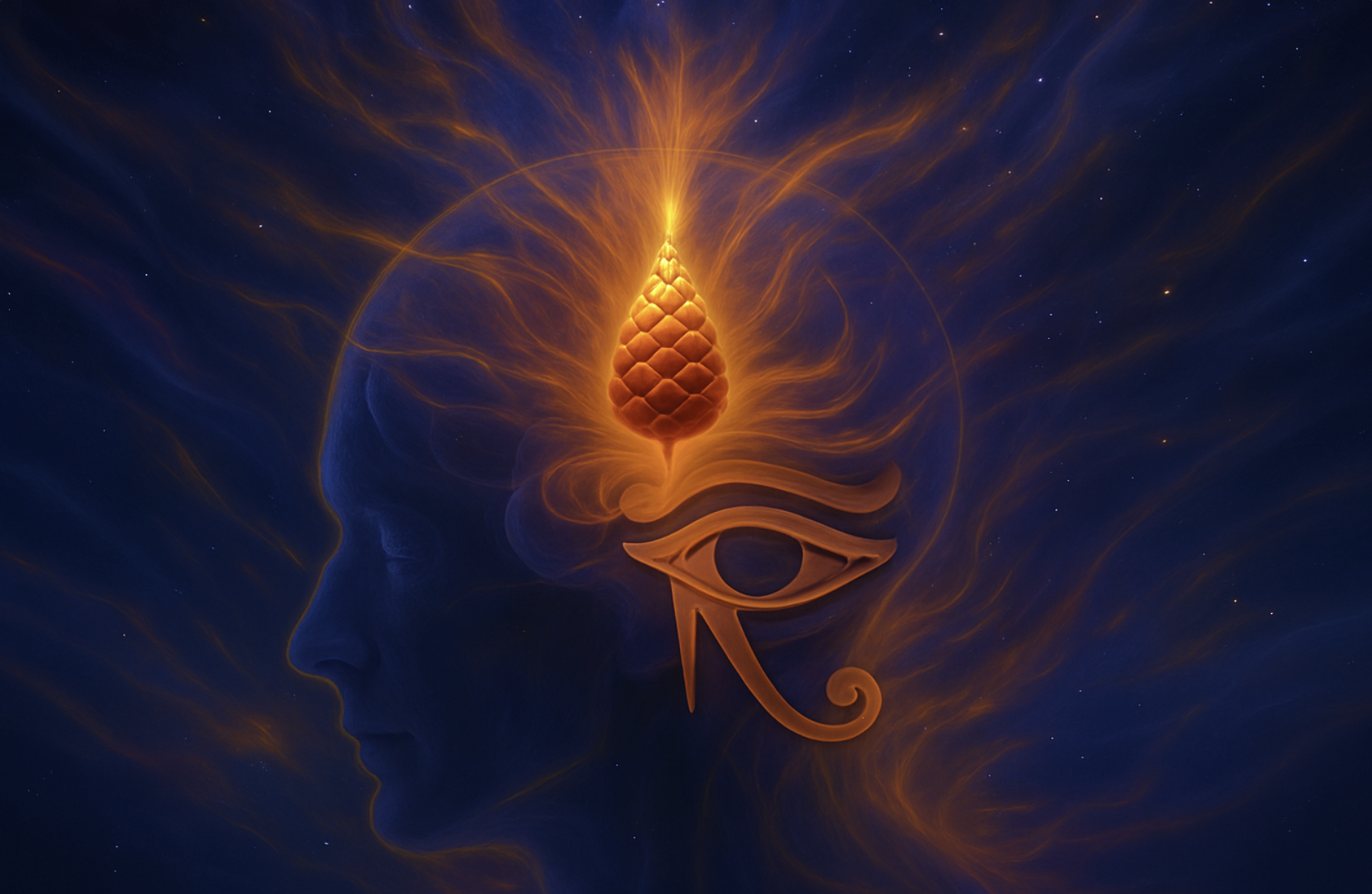
Hidden deep within the human brain lies a structure no bigger than a grain of rice — the pineal gland. Modern physiology calls it an endocrine gland that helps regulate sleep and circadian rhythms. But across thousands of years and nearly every major spiritual tradition, this tiny organ has been revered as far more than a hormonal timekeeper.
It was considered a gateway to higher consciousness, the seat of inner vision, a bridge between our physical lives and the infinite. And strikingly, ancient cultures left a clue — a symbol repeated in temples, scriptures, and sacred art around the world: the pinecone.
In our hyper-stimulated, chemically burdened world, this ancient organ is quietly losing its vitality. Understanding what it does, how it became so revered, and how to care for it can help us reclaim not just better health but an inner wisdom modern life too often dulls.
The Pineal Gland in Physiology
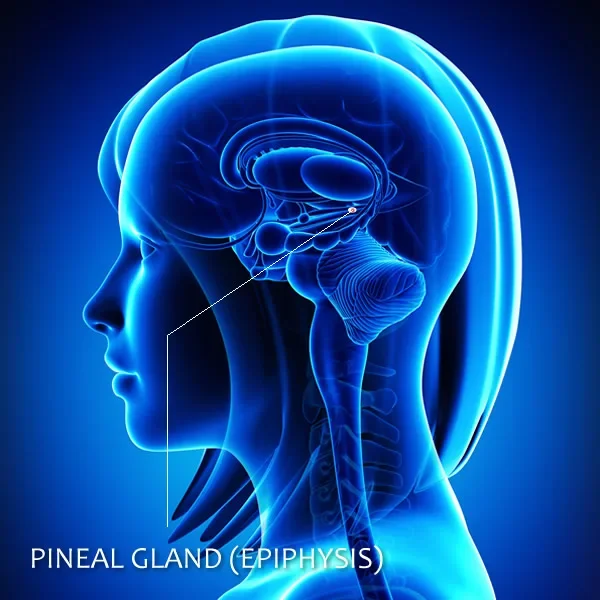
From a biological standpoint, the pineal gland is part of the endocrine system. It secretes melatonin, the hormone that governs sleep-wake cycles, cellular repair, and nightly renewal. It helps regulate circadian rhythms and interacts with the hypothalamus — the body’s master clock.
Some research suggests it may also produce small amounts of DMT (N,N-dimethyltryptamine) — a molecule found in psychedelics - associated with mystical and near-death experiences — though this remains debated. What is clear is that the pineal is light-sensitive and strongly tied to the brain’s systems that modulate mood, sleep, and internal balance.
The “Pinecone” in Human Spirituality — They Knew
Long before laboratories, cultures recognized that this tiny pinecone-shaped gland was special — and they immortalized it through a single, striking symbol.
Ancient Egypt — The Eye of Horus, often compared to a cross-section of the brain, echoes the pineal’s placement and shape. Temples feature pinecone-like carvings symbolizing awakening and eternal life.
Mesoamerican civilizations — The Maya and Aztec incorporated pinecone motifs in sacred architecture to represent divine knowledge and the eternal spark of consciousness.
Hinduism & Buddhism — The Ajna chakra (third eye) sits between the brows, associated with insight and enlightenment. Kundalini art often shows energy rising to a pinecone-shaped bloom — awakening inner vision.
Greek & Roman Mysteries — Dionysus and Bacchus carried staffs called thyrsi, tipped with pinecones, symbols of enlightenment, regeneration, and transcendence.
Christianity — At the very heart of the Vatican stands the Fontana della Pigna, a 13-foot bronze pinecone from the first century, now flanked by peacocks (symbols of immortality). Pinecones appear throughout papal regalia and church carvings.
Esoteric Orders — Freemasons, Theosophists, and alchemists used the pinecone to symbolize the flowering of human consciousness and spiritual illumination.
Everywhere it appears, the pinecone represents awakening — the opening of an inner sight that transcends ordinary perception. Long before MRI scans or neuroscience, they knew.
The Modern Assault on Pineal Health
Despite its sacred legacy, the pineal gland faces an unprecedented modern assault. One of the clearest threats is calcification — the gradual buildup of calcium phosphate crystals that harden the gland and reduce its sensitivity. While some calcification happens naturally with age, today’s environment accelerates it dramatically.
Key factors include:
Fluoridated water — Fluoride accumulates in the pineal more than almost any other tissue.
Heavy metals — Mercury, aluminum, and lead from pollution, cookware, personal care products, and industrial byproducts.
Air pollution & industrial toxins — Pesticides, herbicides, volatile chemicals.
Dietary imbalances — Processed foods, refined sugar, and chronic inflammation.
Artificial light & chronic stress — Overexposure to screens, disrupted circadian rhythms, and overstimulated nervous systems.
A calcified pineal doesn’t just affect sleep — many traditions believe it dulls intuition and higher perception, cutting us off from subtle awareness.
Nurturing and “Decalcifying” the Pineal
Although “decalcify” isn’t a clinical term, we can support pineal health by reducing what harms it and nourishing what helps it thrive.
Filter water — Use high-quality filtration to remove fluoride, chlorine, and heavy metals.
Eat mineral-rich, detoxifying foods — Seaweed (iodine), chlorella and spirulina (bind heavy metals), raw cacao (magnesium, antioxidants), turmeric (anti-inflammatory), dark leafy greens.
Get natural sunlight — Especially morning light to reset circadian rhythm and support melatonin cycles.
Reduce chemical exposure — Avoid aluminum cookware and deodorant, choose organic produce, and limit pesticides.
Sweat often — Through sauna, exercise, or hot baths to aid detoxification.
Honor darkness at night — Block blue light, sleep in true darkness, let melatonin flow naturally.
Meditate and breathe deeply — Quieting the mind and breathwork are believed to stimulate pineal activity.
Support mineral balance — Magnesium, boron, and silica help regulate calcium deposition.
These practices not only improve sleep and hormonal balance but may help restore the pineal’s sensitivity — reviving our connection to deeper consciousness.
Awakening the Third Eye — Beyond Physiology
In nearly every mystical tradition, a healthy pineal is synonymous with an awakened third eye — a faculty of perception that transcends the five senses. In yogic and Buddhist paths, its opening can lead to Samadhi — deep meditative absorption where the illusion of separateness dissolves. Taoist and Chinese esoteric practices call it the “upper dan tian,” the seat of inner alchemy and spiritual vision.
Those who experience a fully awakened pineal describe:
Out-of-body experiences (OBEs) — a feeling of leaving the physical body while remaining conscious.
Access to the astral plane — realms beyond ordinary perception, sometimes described as higher vibrational worlds.
Seeing energy fields or auras surrounding people, animals, and plants.
Profound intuition and telepathic sensitivity — sensing truths, emotions, or even thoughts before words.
Sudden, transformative insight — moments of universal love, oneness, and expanded creativity.
Modern science doesn’t confirm these states, yet their consistent description across India, Tibet, China, and countless mystical lineages suggests the pineal is more than a sleep gland. It may be a biological doorway into subtler aspects of consciousness itself.
Physiologically, nourishing the pineal supports deep rest and neuroendocrine balance. Spiritually, it may act as a lens through which awareness perceives beyond ordinary reality — helping us remember we are not merely mechanical beings but conscious, intuitive, and profoundly interconnected.
A Call to Reawaken
For centuries, sages and seekers carved pinecones into temples, scepters, and sacred fountains to remind us: there is an eye beyond the eyes, a wisdom beyond the intellect. They knew.
In caring for this little gland — by detoxifying, aligning with natural light, eating real food, and practicing stillness — we reclaim a birthright: clear perception, intuitive intelligence, and a living connection to the deeper fabric of reality.
At Shift Ethos, we believe true wellness is more than the absence of disease — it’s the awakening of body, mind, and spirit. If this vision resonates, explore our WELLNESS PATHWAYS Process — a journey to detoxify, reawaken, and thrive at every level of being.
Double-click to edit...